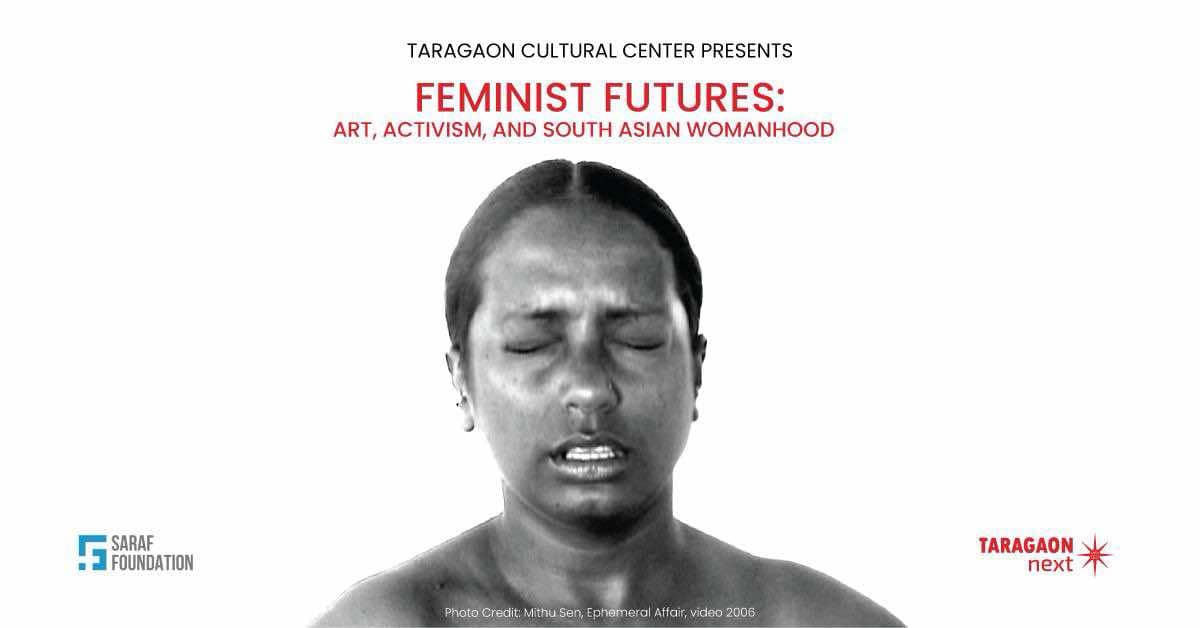
Kathmandu / Taragoan Cultural Center, in collaboration with the Saraf Foundation, will present Feminist Futures: Art, Activism, and South Asian Womanhood, a groundbreaking exhibition curated by Dr. Arshiya Lokhandwala.
This exhibition, featuring ten visionary South Asian women artists, will explore the complex intersections of feminism, art, and activism in South Asia, addressing themes of patriarchy, colonial legacies, and gendered politics. The event will open with a symposium, and culminate in the exhibition opening on January 23.
Feminist Futures aims to interrogate the deeply entrenched societal structures of South Asia that simultaneously revere and oppress women. The exhibition presents a multifaceted view of South Asian womanhood, where historical reverence for female figures exists alongside stark realities of gender inequality, violence, and conservatism. Through a diverse range of media—including sculpture, photography, installation, video, and performance—the works of the featured artists reclaim and reshape the narratives of women’s lives in the region.
According to the Founding director of Saraf foundation and Taragaon Next Namita Saraf, the show aims to highlight feminist issues in Nepal connecting them to the broader struggles of women across South Asia. “With this show we want to spotlight feminist issues in Nepal, drawing connections to the broader struggles of women across South Asia—in India, Pakistan, Sri Lanka, and Bangladesh—to reveal shared narratives of resilience and resistance," she said.
The exhibition will feature the works of Anita Dube (India), Anoli Perera (Sri Lanka), Ashmina Ranjit (Nepal), Bidhata KC (Nepal), Mithu Sen (India), Naiza Khan (Pakistan), Pushpamala N (India), Sheba Chhachhi (India), Tayeba Begum Lipi (Bangladesh), and Uma Bista (Nepal). Each artist uniquely challenges traditional gender roles and examines societal constructs that affect women’s autonomy.
According to Dr. Lokhandwala, Feminist Futures offers a critical platform for audiences to engage with the urgent questions of gender and power. "This exhibition highlights the resilience and strength of South Asian women artists as they navigate and challenge deeply entrenched hegemonic societal frameworks," she said.
The exhibition will explore a variety of pressing themes through the eyes of these artists. For instance, Pushpamala N’s Avega – The Passion (2012) challenges the traditional depictions of female characters in the Ramayana, offering empowering reinterpretations. Ashmina Ranjit’s performance, Sita! The Ideal Wife? (2025), critiques the practice of Kanyadan in Hindu tradition, addressing the loss of agency women experience within marriage and caste systems in Nepal.
Tayeba Begum Lipi’s works delve into the dualities of marriage, using safety pins as metaphors for both the potential for connection and control that can lead to violence. Uma Bista, whose work often reflects the struggles of Nepali women, will showcase pieces that challenge taboos such as Chaupadi and critique the cultural veneration of virginity, symbolized in the Kumari tradition.
Bidhata KC, another Nepali artist, uses performance and installation to disrupt restrictive gender roles, inviting women to share their aspirations and challenge societal expectations. The exhibition will also feature works that interrogate the female body as a site of empowerment, with Anita Dube, Naiza Khan, and Anoli Perera each using their art to confront gendered public spaces and reclaim female agency.
The opening night of the exhibition on January 25 will feature a special performance by Ashmina Ranjit at 6 pm. The following day, January 26, will offer an artist’s walkthrough at 3 pm, providing deeper insight into the artists’ works and creative processes.
Feminist Futures emerges as a powerful call to action, offering a platform for solidarity, transformation, and reimagining womanhood in South Asia. By confronting deeply embedded gender norms, it challenges audiences to consider new possibilities for justice, empowerment, and equality.